by Craig Dunman, Master Electrician
What Is a Circuit Breaker?
A circuit breaker is a safety device in your electrical panel that automatically shuts off power to a specific circuit when it detects an overload or fault. Think of it as a guardian of your home’s wiring. If a breaker trips, it’s doing its job—stopping electricity before it can cause overheating, damage, or even a fire.
Circuit breakers replace older fuse systems and are now standard in modern homes. Each breaker is connected to specific areas or appliances in your home: kitchen outlets, air conditioners, lighting circuits, etc.
How Does a Breaker Work?
Breakers are designed with thermal and magnetic mechanisms that sense unsafe conditions:
- Thermal Trip (Overload Protection): A bimetallic strip heats up and bends as current exceeds safe levels. This bending eventually trips the switch.
- Magnetic Trip (Short Circuit Protection): A sudden surge, such as from a direct short, activates an internal electromagnet that instantly trips the breaker.
Each breaker is rated for a certain amperage—commonly 15, 20, or 30 amps. Exceeding that number, even momentarily, will trip it.
Why Do Breakers Trip?
Some common reasons include:
- Overloaded circuits – Too many devices on one circuit (e.g., space heater + microwave).
- Short circuits – A hot wire touches a neutral or ground, causing a surge.
- Ground faults – Similar to a short, but involves unintended contact with a ground path.
- Worn-out breakers or wiring – Age, damage, or improper installation can cause nuisance trips.
If a breaker trips once, it may just be a fluke. But if it happens again, there’s likely a deeper issue.
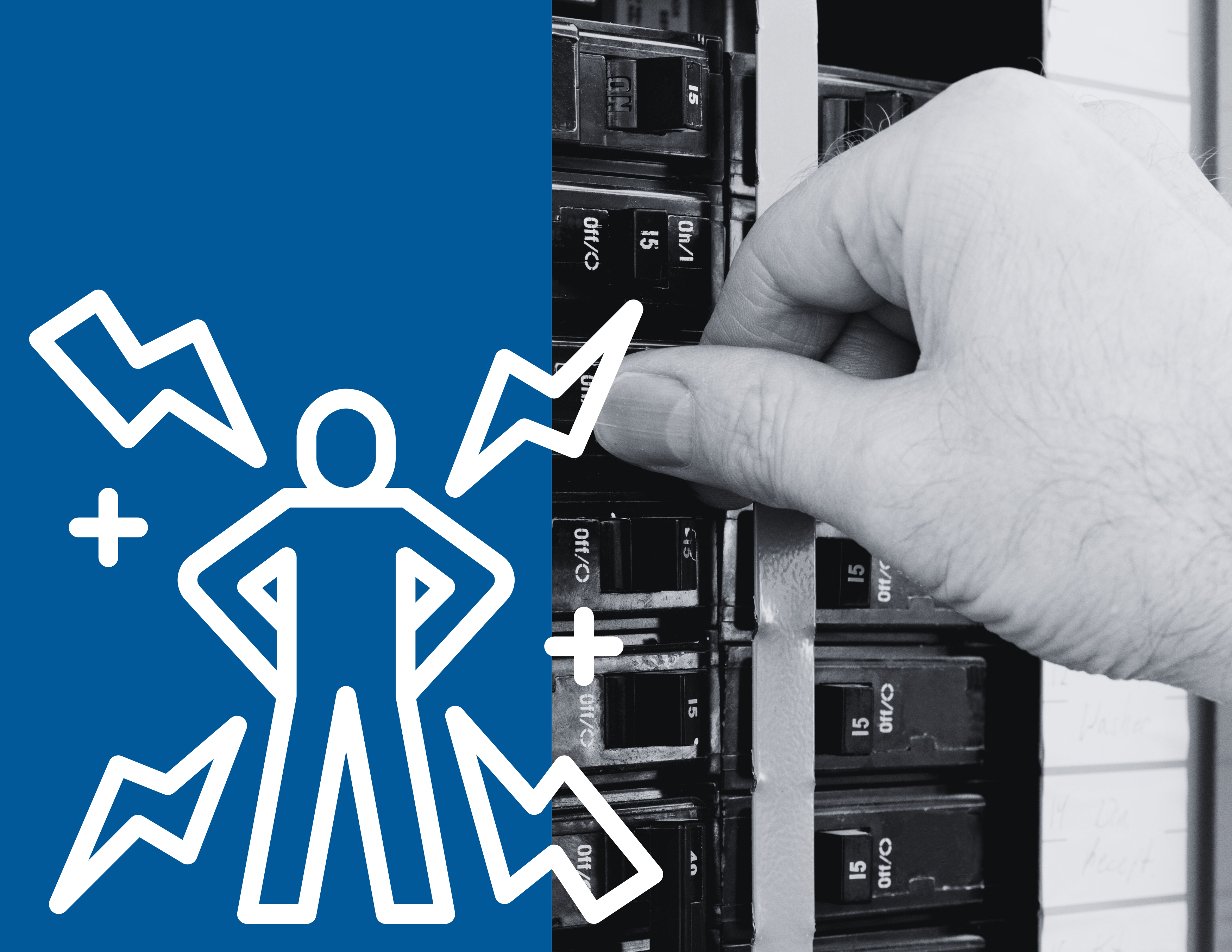
How to Safely Reset a Tripped Breaker
If your power goes out in one part of the house, follow these steps:
- Find your electrical panel. It’s usually in a garage, utility closet, or outside.
- Look for a breaker that’s in the “off” or middle position. A tripped breaker will often look slightly out of line with the others.
- Firmly switch it to the “off” position. Then back to “on.” You must do this in two distinct steps.
- Test your power. If it comes back on, you’ve successfully reset it.
⚠️ IMPORTANT: If the breaker trips again immediately, do not keep resetting it. You’re likely dealing with a more serious issue. ⚠️
When to Call a Licensed Electrician
Here’s when it’s best to leave it to the pros:
- A breaker trips repeatedly, even after unplugging devices.
- You smell burning or hear buzzing from the panel.
- The panel is hot to the touch or shows corrosion.
- Lights flicker or dim when major appliances start.
- You don’t know what’s causing the trip, or just want peace of mind.
Remember: Breakers trip for a reason. Continuously flipping them back on without fixing the root issue can be dangerous.
Bonus Tip: Label Your Breakers
Many homeowners don’t know which breaker controls what. Take time to label them clearly—this saves time during an outage and helps electricians work more efficiently when needed. This is also a service we offer here at Dunman Electric. Or you can read our article on how to label your panels on your own.
Whether you’re dealing with a stubborn breaker, need panel upgrades, or just want a professional inspection, Dunman Electric has you covered. Our licensed electricians bring decades of experience, and we’re happy to help you learn how to keep your home safe and efficient.
📞 Call us today or book online for prompt, reliable service.
Leave a Reply