
Tag: dunman

  • Meet Craig Dunman, Master Electrician

    Meet Craig Dunman, Master Electrician

    TEME #33973 | TECL #23045 | Licensed & Insured

    Craig Dunman was 22 when he first stepped into the electrical trade—and he’s never looked back. What started as a steady paycheck quickly became a lifelong passion. By 28, he had earned his master electrician license and knew he’d found his calling. “I’ve never worked another day since,” he says. “Electrical is play. It’s like therapy.”

    In 1997, Craig and his wife Becky opened Dunman Electric with a simple mission: do good work, be fair, and treat people right. Nearly three decades later, they’re still at the helm—Craig in the field, Becky in the office—running the business the way they always have: hands-on, grounded, and rooted in trust.

    But Craig isn’t defined by the job. He’s a lifelong doer who stays in motion. He plays ice hockey year-round, snowboards in the mountains any chance he gets, and scuba dives for fun. On land, he spends time trail riding with his horse, Nitro, or bass fishing from his Dunman Electric-branded bass boat.

    He’s outdoors whenever possible, usually doing something active, physical, and off the beaten path.

    Craig’s the kind of person who gets up early, keeps his gear in order, and knows how to use his hands—whether it’s fixing a wiring issue or tightening the cinch on a saddle. He doesn’t sit still well, doesn’t talk himself up, and doesn’t take shortcuts. What he builds—on the job or off—is meant to last.

    He and Becky have been married since 1994 and raised three kids together: Lo, Cody, and Abbie. Their life has always been full of tools, laughter, projects, and movement. Craig isn’t just the guy behind the name—he’s the real thing. A master electrician, yes—but also a rider, a dad, a teammate, and someone who genuinely loves the work he does.

    To find out more about our team members, click here. To see what services we offer, click here. To schedule with us, give us a call at (512)280-8847 or go to our contact us page. We look forward to hearing from you, and hope you have a happy weekend!
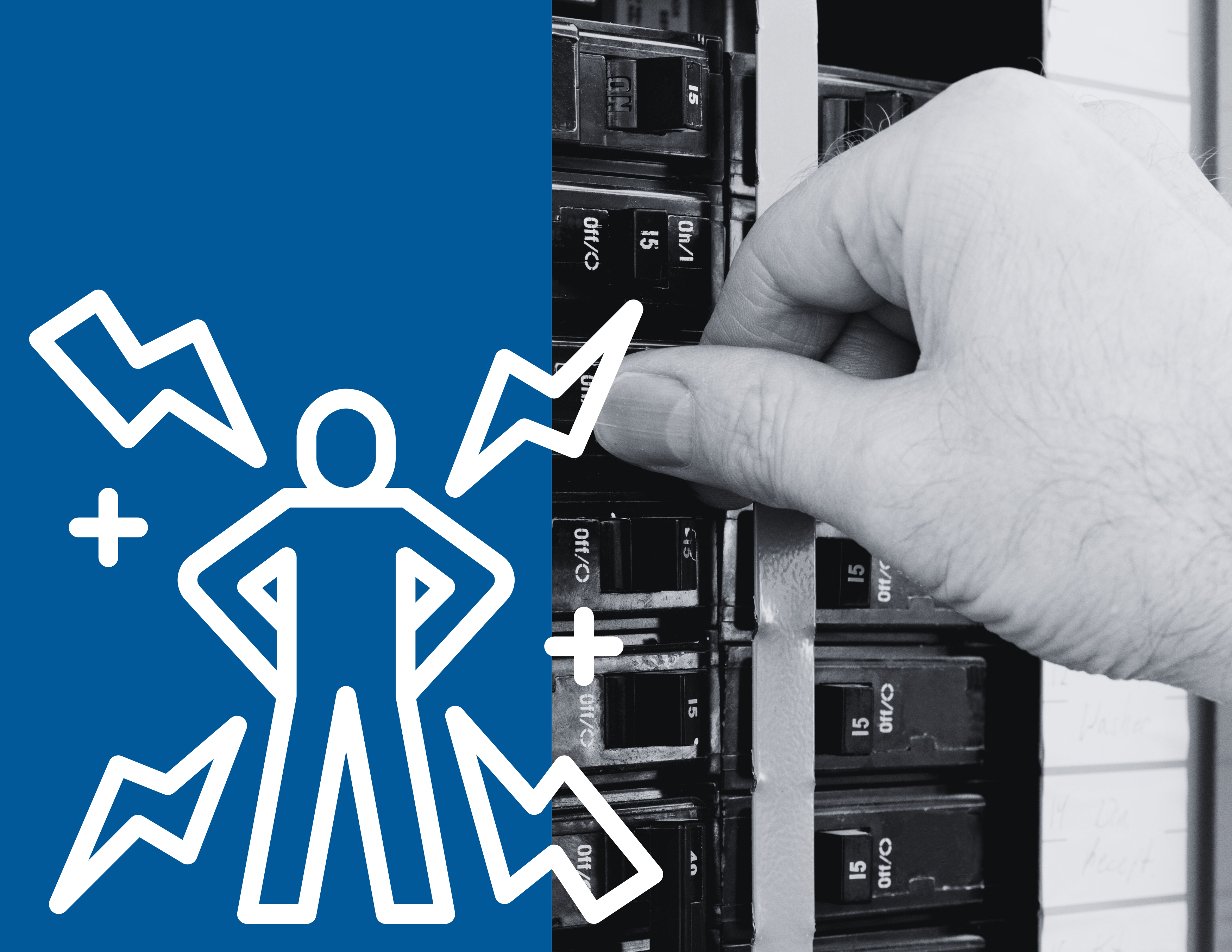
  • Resetting Your Circuit Breaker Safely

    Resetting Your Circuit Breaker Safely

    by Craig Dunman, Master Electrician

    What Is a Circuit Breaker?

    A circuit breaker is a safety device in your electrical panel that automatically shuts off power to a specific circuit when it detects an overload or fault. Think of it as a guardian of your home’s wiring. If a breaker trips, it’s doing its job—stopping electricity before it can cause overheating, damage, or even a fire.

    Circuit breakers replace older fuse systems and are now standard in modern homes. Each breaker is connected to specific areas or appliances in your home: kitchen outlets, air conditioners, lighting circuits, etc.

    How Does a Breaker Work?

    Breakers are designed with thermal and magnetic mechanisms that sense unsafe conditions:

    • Thermal Trip (Overload Protection): A bimetallic strip heats up and bends as current exceeds safe levels. This bending eventually trips the switch.
    • Magnetic Trip (Short Circuit Protection): A sudden surge, such as from a direct short, activates an internal electromagnet that instantly trips the breaker.

    Each breaker is rated for a certain amperage—commonly 15, 20, or 30 amps. Exceeding that number, even momentarily, will trip it.

    Why Do Breakers Trip?

    Some common reasons include:

    • Overloaded circuits – Too many devices on one circuit (e.g., space heater + microwave).
    • Short circuits – A hot wire touches a neutral or ground, causing a surge.
    • Ground faults – Similar to a short, but involves unintended contact with a ground path.
    • Worn-out breakers or wiring – Age, damage, or improper installation can cause nuisance trips.

    If a breaker trips once, it may just be a fluke. But if it happens again, there’s likely a deeper issue.

    How to Safely Reset a Tripped Breaker

    If your power goes out in one part of the house, follow these steps:

    1. Find your electrical panel. It’s usually in a garage, utility closet, or outside.
    2. Look for a breaker that’s in the “off” or middle position. A tripped breaker will often look slightly out of line with the others.
    3. Firmly switch it to the “off” position. Then back to “on.” You must do this in two distinct steps.
    4. Test your power. If it comes back on, you’ve successfully reset it.

    ⚠️ IMPORTANT: If the breaker trips again immediately, do not keep resetting it. You’re likely dealing with a more serious issue. ⚠️

    When to Call a Licensed Electrician

    Here’s when it’s best to leave it to the pros:

    • A breaker trips repeatedly, even after unplugging devices.
    • You smell burning or hear buzzing from the panel.
    • The panel is hot to the touch or shows corrosion.
    • Lights flicker or dim when major appliances start.
    • You don’t know what’s causing the trip, or just want peace of mind.

    Remember: Breakers trip for a reason. Continuously flipping them back on without fixing the root issue can be dangerous.

    Bonus Tip: Label Your Breakers

    Many homeowners don’t know which breaker controls what. Take time to label them clearly—this saves time during an outage and helps electricians work more efficiently when needed. This is also a service we offer here at Dunman Electric. Or you can read our article on how to label your panels on your own.

    Whether you’re dealing with a stubborn breaker, need panel upgrades, or just want a professional inspection, Dunman Electric has you covered. Our licensed electricians bring decades of experience, and we’re happy to help you learn how to keep your home safe and efficient.

    📞 Call us today or book online for prompt, reliable service.

    (512)280-8847 . becky@dunmanelectric.com . contact us

  • Why Smoke Detectors Matter and How to Install Battery-Operated Models Yourself

    Why Smoke Detectors Matter and How to Install Battery-Operated Models Yourself

    by Craig Dunman, Master Electrician

    Smoke detectors are among the most important safety devices in your home. We at Dunman Electric want to empower homeowners with the knowledge and confidence to protect themselves and their families. In this article, I’ll explain why smoke detectors save lives, clarify the difference between battery-operated and hardwired alarms, and provide a clear, step-by-step guide to installing your own battery-operated smoke detectors safely.

    Smoke detectors detect the presence of smoke particles through ionization or photoelectric sensors. When smoke reaches the detector’s sensor, the device sounds a loud alarm to alert you and your family to potential danger.

    According to the National Fire Protection Association (NFPA), working smoke alarms reduce the risk of dying in a home fire by nearly 50%. Many tragic fires happen at night when people are asleep and unaware. A smoke alarm’s loud signal provides early warning, giving everyone more time to escape safely.

    Understanding Alarm Signals

    • Continuous Loud Alarm: This means smoke or fire has been detected. Immediately evacuate your home and call emergency services.
    • Intermittent Chirping: This signals low battery power or device malfunction. Replace the battery right away; don’t ignore the warning.
    • No Sound During Test: If the alarm doesn’t sound during testing, replace batteries or the unit itself.

    Battery-Operated vs. Hardwired Smoke Detectors: What’s the Difference?

    There are two common types of smoke detectors you’ll find in homes:

    Battery-Operated Smoke Detectors

    • Power Source: Run solely on batteries (usually 9V or AA).
    • Installation: Easy and quick—no wiring needed.
    • Function: Standalone units, meaning each detector works independently. If one detects smoke, only that unit will sound an alarm.
    • Maintenance: Batteries must be checked regularly and replaced at least once every 12 months. Some newer models come with sealed 10-year lithium batteries which allow for fewer battery replacements over time, but should still be tested monthly.
    • Best For: Homes without existing wiring or as additional detectors for enhanced coverage.

    Hardwired Smoke Detectors

    • Power Source: Connected to your home’s electrical system, typically on a 120V circuit, with a battery backup in case of power failure.
    • Installation: Requires electrical knowledge and proper wiring, best done by a licensed electrician.
    • Function: Usually interconnected—when one alarm sounds, all alarms in the home sound simultaneously. This provides quicker alerts throughout the house.
    • Maintenance: Battery backup needs periodic replacement; the main power supply is constant.
    • Best For: New construction or full home safety systems.

    Both types must meet Underwriters Laboratories (UL) standards to ensure that they have passed rigorous safety and reliability testing.

    Step-by-Step Guide to Installing Battery-Operated Smoke Detectors

    If you choose battery-operated alarms, you can install them yourself with these straightforward steps.

    What You Need

    • UL-listed battery-operated smoke detectors (look for the UL label on packaging)
    • Appropriate batteries (usually 9V or AA; confirm with your unit’s instructions)
    • Screwdriver (typically Phillips (+) head)
    • Pencil
    • Drill and wall anchors (optional, for drywall installations)

    Installation Steps

    1. Select Proper Locations
      • Inside every bedroom
      • Outside each sleeping area (in hallways)
      • On every level of your home, including the basement
      • Avoid placing near windows, doors, or air vents where drafts can interfere
      • Mount on the ceiling or high on a wall (smoke rises)
    2. Mark the Mounting Holes
      Use the mounting bracket as a template. Hold it in place and mark the screw holes with a pencil.
    3. Drill Pilot Holes (if needed)
      For drywall or plaster, drill small holes or insert wall anchors to secure the screws firmly.
    4. Attach the Mounting Bracket
      Screw the bracket securely into the wall or ceiling.
    5. Insert Batteries
      Open the battery compartment and insert fresh batteries, ensuring correct polarity (+/-).
    6. Mount the Detector
      Attach the smoke detector to the bracket, usually by twisting or snapping it into place.
    7. Test the Detector
      Press the test button to verify the alarm sounds loudly. If it doesn’t, check the battery installation or replace batteries.
    8. Maintain Regularly
      • Test monthly to ensure operation.
      • Replace batteries at least once a year, or as soon as the low battery chirp sounds.
      • Replace the entire smoke detector every 10 years, as sensors can degrade over time. We recommend writing the date of install somewhere on the detector to ensure you know when to replace the unit.

    Important Safety Notes

    • Never disconnect a smoke detector to silence an alarm without investigating the cause.
    • Avoid painting over detectors or covering them, as this can impair function.
    • For homes with hardwired systems, consult a licensed electrician (like Dunman Electric) for installation or maintenance.

    Helpful Safety Resources

    For further safety guidance, visit these trusted sites:

    The Austin Fire Department has a free smoke alarm program for homeowners in the Austin area. For more information, visit their website here.

    Final Thoughts

    Smoke detectors are a simple, affordable, and essential part of home safety. Whether you install battery-operated models yourself or invest in hardwired systems, having properly functioning alarms can save lives. A detector that is installed incorrectly or does not work is as good as not having one at all.

    If you have any questions about your home’s electrical safety or want professional help installing or upgrading smoke detectors- give us a call, shoot us an email, or reach out through our contact form and schedule a checkup today! Your safety is always our priority.

    (512) 280-8847 . becky@dunmanelectric.com . contact us