
Subscribe to continue reading
Subscribe to get access to the rest of this post and other subscriber-only content.

Subscribe to get access to the rest of this post and other subscriber-only content.
TEME #33973 | TECL #23045 | Licensed & Insured
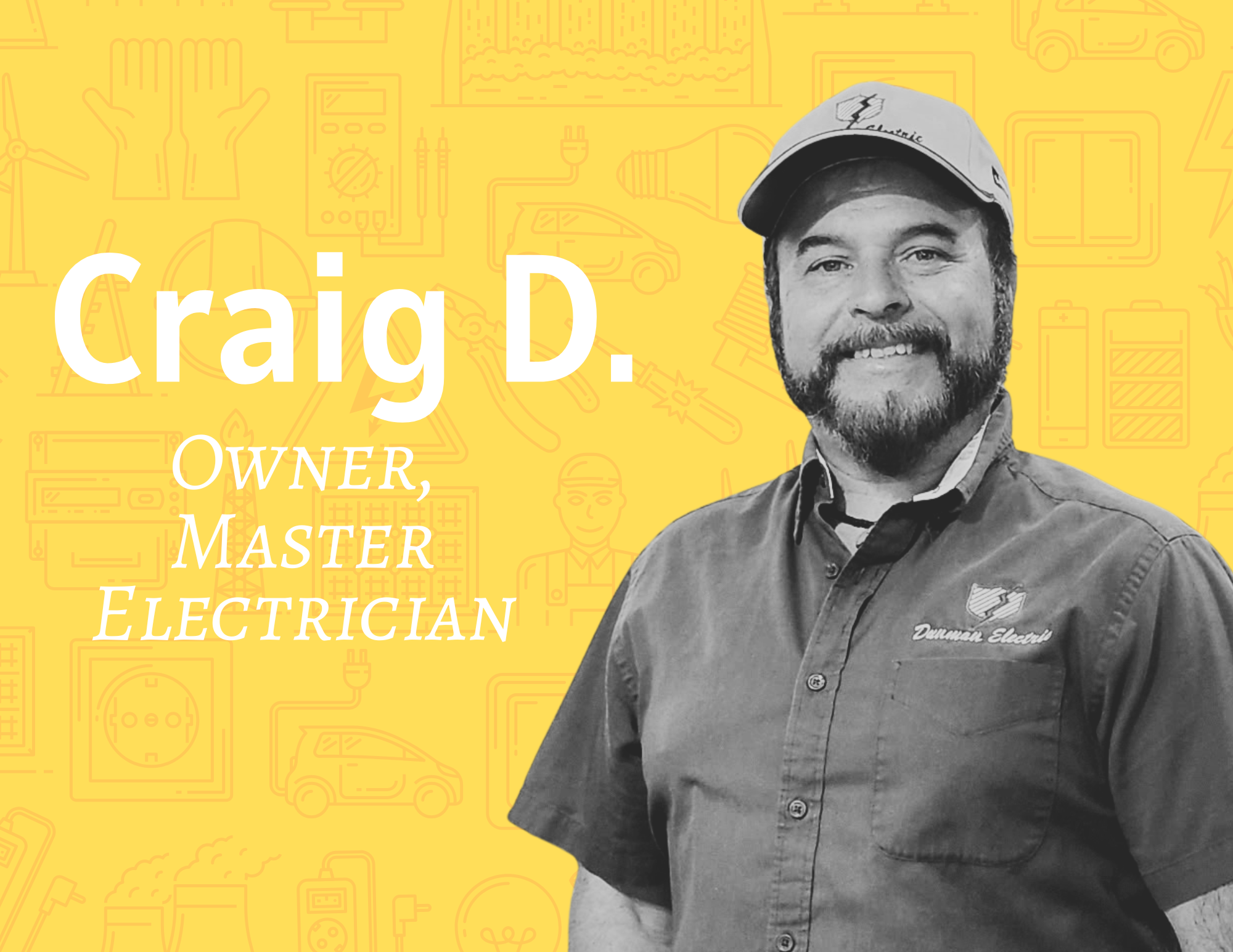
Craig Dunman was 22 when he first stepped into the electrical trade—and he’s never looked back. What started as a steady paycheck quickly became a lifelong passion. By 28, he had earned his master electrician license and knew he’d found his calling. “I’ve never worked another day since,” he says. “Electrical is play. It’s like therapy.”

In 1997, Craig and his wife Becky opened Dunman Electric with a simple mission: do good work, be fair, and treat people right. Nearly three decades later, they’re still at the helm—Craig in the field, Becky in the office—running the business the way they always have: hands-on, grounded, and rooted in trust.
But Craig isn’t defined by the job. He’s a lifelong doer who stays in motion. He plays ice hockey year-round, snowboards in the mountains any chance he gets, and scuba dives for fun. On land, he spends time trail riding with his horse, Nitro, or bass fishing from his Dunman Electric-branded bass boat.


He’s outdoors whenever possible, usually doing something active, physical, and off the beaten path.
Craig’s the kind of person who gets up early, keeps his gear in order, and knows how to use his hands—whether it’s fixing a wiring issue or tightening the cinch on a saddle. He doesn’t sit still well, doesn’t talk himself up, and doesn’t take shortcuts. What he builds—on the job or off—is meant to last.
He and Becky have been married since 1994 and raised three kids together: Lo, Cody, and Abbie. Their life has always been full of tools, laughter, projects, and movement. Craig isn’t just the guy behind the name—he’s the real thing. A master electrician, yes—but also a rider, a dad, a teammate, and someone who genuinely loves the work he does.

To find out more about our team members, click here. To see what services we offer, click here. To schedule with us, give us a call at (512)280-8847 or go to our contact us page. We look forward to hearing from you, and hope you have a happy weekend!
by Craig Dunman, Master Electrician
Austin homes are a mixed bag. You’ve got 1950s ranchers, 1980s flips, 2000s builder-grade boxes, and everything in between — all wired to whatever code was current at the time. Problem is, most of those systems were never upgraded. And when the wiring hasn’t been touched in decades, there’s often a fire hazard just waiting to surface.
Here’s what we’re still pulling out of homes all over Austin and the surrounding area — and why it matters.
If your home still has a Federal Pacific panel — or anything labeled “Stab-Lok” — stop waiting. These breakers are known to fail under overload. When that happens, instead of tripping like they’re supposed to, they stay live and let wires overheat. Plenty of house fires across the country have started this way, and Austin is no exception.
They haven’t passed UL listing in years, and they’re not compliant with modern standards under NEC 240.60. These panels are NOT fixable. They ARE dangerous. Replacement is necessary to ensure your safety.
Zinsco panels were common through the ’60s and ’70s. We still find them in older areas of Austin.
The biggest issue? The breakers can fuse to the bus bar, so when there’s a short or fault, the panel doesn’t cut power. That means your wiring can overheat, arc, and catch fire — with no breaker ever flipping. Always remember “Arcs make sparks and sparks make fire.”
If your panel says “Zinsco” or “Sylvania,” have it replaced. These aren’t up to current safety expectations and can’t be trusted.
If your house was built between 1965 and 1973 and hasn’t been rewired, you probably have aluminum branch circuits. These expand and contract far more than copper wiring when heated leading to loose connections over time. Loose connections lead to arcing. Arcing causes fires. Remember what we said above? “Arcs make sparks and sparks make…fire.”
Modern code (NEC 110.14) requires proper aluminum-rated connectors and antioxidant paste. If you’ve got aluminum and it’s untouched, it’s not code-compliant and not safe.
You’d be shocked how many Texas homes are running modern setups — think deep freezers, gaming PCs, tankless water heaters — on circuits designed for a rotary phone and a lightbulb.
We routinely find 15-amp circuits carrying 25 amps of load, especially in garages, kitchens, and add-on spaces like enclosed porches or sheds. When breakers trip repeatedly, or you have warm outlets or flickering lights, that’s not “annoying.” That’s your system saying, I can’t carry this safely.
Under NEC 210.11, branch circuits must be sized and distributed appropriately. If you’ve added square footage, appliances, or even a hot tub without balancing your load? You’re out of compliance — and at risk.
We don’t sugarcoat this. If you’re not licensed in Texas, you should not be touching electrical systems. That includes handymen, roofers, contractors, and homeowners. Watching YouTube or “doing it before” does not qualify you.
In Texas, electrical work without a license is illegal for a reason. It’s not about gatekeeping — it’s about protecting lives. Handymen doing unpermitted electrical work are not just breaking the law — they’re putting your family and your home at serious risk.
Homes from the 1940s–60s — especially in Central Austin and older pockets of Georgetown — may still have original cloth-wrapped or early plastic-sheathed cable. This stuff deteriorates inside the walls, sometimes flaking apart the second it’s touched.
No grounding. No modern insulation. Just dry, brittle sheathing around live wires.
This isn’t “keep an eye on it” territory — it’s “replace this now” territory.
You won’t always see the warning signs. Fires from electrical faults start behind your walls — fast, silent, and deadly. A panel that “still works” or a house that “hasn’t had problems” doesn’t mean it’s safe. It just means you’ve been lucky.
If you’re not sure what panel you have…
If you’ve got aluminum wiring and no paperwork saying it’s been remediated…
If your breakers trip every other day or someone unlicensed did your electrical…
Book a licensed inspection.
It’s not overkill. It’s common sense.
Call us today or reach out through our contact form to schedule!